
Macro Strategy
The Global Economic Risks Facing the Second Half of 2026, a Review
The second half of 2026 sits on a knife edge, with a fragile energy truce, a new round of trade friction, and questions over the financing behind the artificial intelligence boom. We review the risks that will decide whether the year accelerates or stalls.
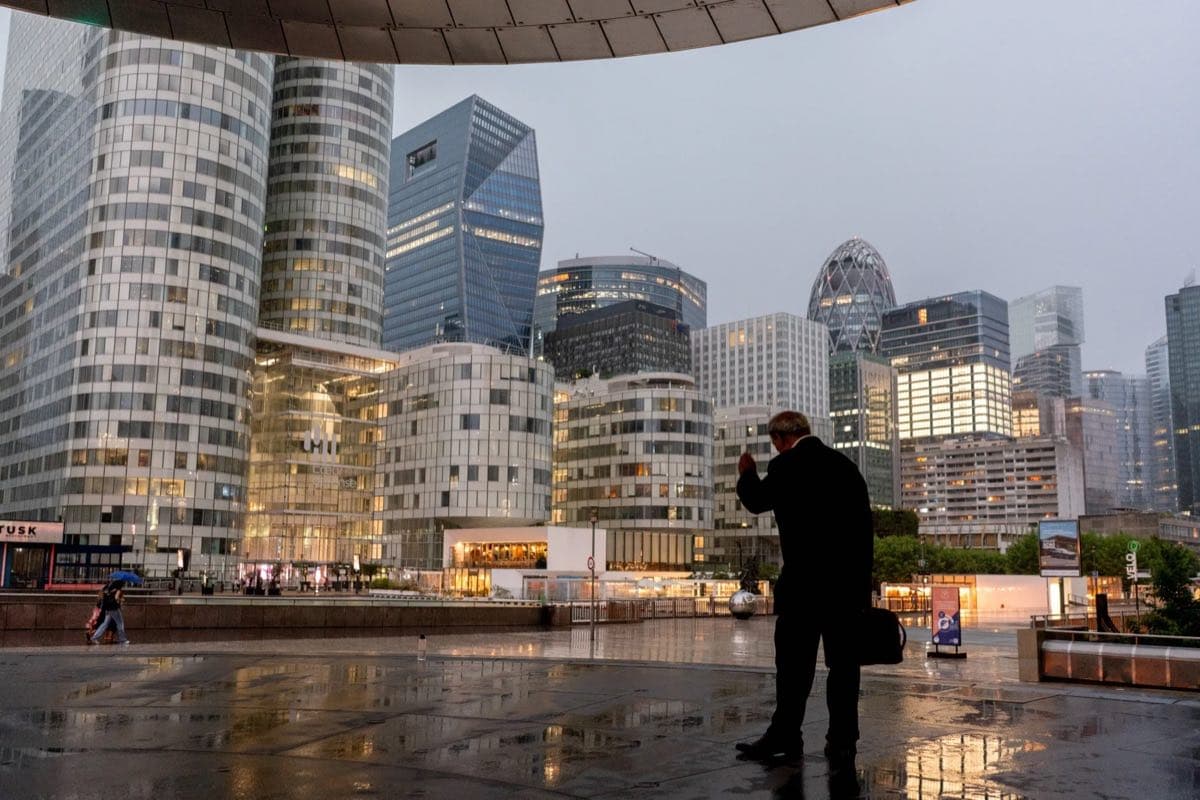
Every year arrives with its list of things that could go wrong, yet the second half of 2026 is unusual in how tightly those things are bound together. A truce that may or may not hold, a trade regime that keeps hardening, and a technology boom financed in ways few fully understand are not separate stories but strands of the same one. This review sets out the risks that will shape the months ahead, how they connect, and how a disciplined investor might think about a year in which the range of outcomes is wider than usual and the margin for error is thin.
A Year Balanced on a Knife Edge
The global economy enters the second half of 2026 in an unusually delicate position. The first half was sluggish, with growth running at a pace that felt closer to a stall than an expansion, and forecasters now expect the second half to accelerate meaningfully if a handful of things break the right way. The problem is that the range of possible outcomes is exceptionally wide, wider than the usual margin of error that surrounds any forecast, and the difference between the optimistic and pessimistic cases rests on events that are genuinely hard to predict.
This is a review of those events. Rather than a single dominant threat, the second half of the year presents a cluster of interlocking risks, each of which could either fade quietly or tip the balance towards a slowdown. The task for an investor is not to guess which one resolves first but to understand how they connect, because in a year this finely balanced the interactions matter as much as the individual risks themselves.
The Energy Question at the Centre
At the heart of the outlook sits the fragile truce in the Middle East and the price of oil that hangs on it. Analysts describe the durability of the current ceasefire as close to a coin flip, and that single uncertainty fans out into two very different worlds. In the benign case, calm holds, oil settles into the low seventies a barrel, and cheaper energy flows through to households as a disinflationary tailwind that lifts real incomes and supports spending in the second half.
In the adverse case the truce breaks, and the consequences cascade. Estimates for oil in a disrupted scenario range from the low nineties towards the mid nineties a barrel, a level that would revive inflation, force central banks to stay restrictive for longer, and tighten financial conditions just as growth was meant to be recovering. The gap between these two paths is the widest fault line in the entire forecast, and almost every other risk is amplified or muted depending on which way it falls.
The Return of Trade as a Weapon
The second major theme is the steady weaponisation of trade. A wave of tariff measures is due to roll over during the summer, with temporary levies expiring and replacements expected to keep the revenue flowing at a rate of tens of billions of dollars each month. What began as a series of one off disputes is hardening into a permanent feature of the landscape, and businesses are being forced to plan around a level of protectionism that would have seemed extreme only a few years ago.
Europe is sharpening its own tools in parallel, with a sharp rise in trade defence investigations aimed largely at China and an economic security agenda that is moving from rhetoric towards implementation. The effect of all this is not necessarily a single dramatic shock but a persistent drag, raising costs, complicating supply chains, and adding a layer of friction to global commerce that saps a little growth from everywhere at once. Trade tension has become less an event to fear and more a condition to live with.
The Machine Under the Market
The third risk is the least visible and potentially the most consequential. The boom in artificial intelligence has been financed through an increasingly intricate web of arrangements between the companies that make the chips, the providers of cloud computing, and the labs building the models. International regulators have begun to warn about the circular nature of some of this financing, where the same money appears to flow between related parties in ways that can flatter the health of the whole system. Private credit lending to the sector has expanded several times over in only a few years.
The concern is not that artificial intelligence lacks a future but that the way its expansion has been funded could unwind quickly if sentiment turns. Because much of the lending sits outside the traditional banking system, a correction could arrive faster and with less warning than a conventional credit event. One illustrative scenario suggests that a sharp fall in technology shares of around a quarter would be enough to knock more than a full percentage point off global growth. In a market whose gains have been concentrated in a narrow band of companies, that concentration is itself a risk.
The Politics of the Second Half
Layered on top of the economic risks is a crowded political calendar. A closely watched central bank decision arrives under new leadership, and the direction it sets on interest rates will shape financial conditions for the rest of the year. Beyond that sit midterm elections in the United States, a national vote in Israel that bears directly on the durability of the Middle East truce, and regional elections in Germany that could influence the fiscal stance of the largest economy in the eurozone.
Politics matters here not for its own sake but because each of these events can move the economic variables that dominate the outlook. An election result can change the odds of the ceasefire holding, a central bank appointment can change the path of rates, and a regional vote can change the willingness of a government to spend. In a year balanced this finely, the political calendar is not background noise but a series of switches that could flip the economic story in either direction.
What Could Go Right
A review that dwells only on risk paints a misleading picture, because the same conditions that could go wrong could also go right. If the energy truce holds, the resulting fall in oil would act as a broad stimulus, lifting real incomes across the developed world and giving central banks room to ease. The productivity gains promised by artificial intelligence, if they begin to show up in the data, could raise the economy's speed limit and justify at least part of the enthusiasm in the market.
There are already tentative signs of resilience. Parts of Europe have performed better than the gloomy narrative would suggest, corporate behaviour in the eurozone has held up, and the acceleration that forecasters pencil in for the second half is a real possibility rather than a fantasy. The optimistic case does not require everything to go perfectly. It requires only that the worst of the risks stay contained, at which point the underlying momentum can reassert itself.
How We Read It
We read the second half of 2026 as a year that rewards preparation over prediction. The honest position is that no one can know whether the ceasefire holds, whether trade tension escalates, or whether the financing behind artificial intelligence proves sound, and the spread of plausible outcomes is unusually large. In that environment the temptation to make a single bold call is exactly the wrong instinct, because the cost of being wrong is high and the odds are close to even on the questions that matter most.
Our preference is to build portfolios that can withstand more than one of these scenarios rather than to wager everything on the one we consider most likely. That means favouring resilience over leverage, keeping the flexibility to act when clarity arrives, and remembering that the connections between these risks can turn a manageable problem into a larger one. The second half of the year may well accelerate as the optimists hope. The discipline is to be positioned so that we benefit if it does, and endure if it does not.
The views expressed are for general informational purposes only and do not constitute investment, legal, or tax advice. Forecasts and scenarios referenced are illustrative and subject to significant uncertainty.